
A commercial building can receive its annual Building Warrant of Fitness for years without issue, but that does not necessarily mean it will pass an Auckland Council on site audit.
This recently became clear at a commercial property we manage, where a Council audit identified passive fire compliance issues that had not previously been raised through the annual BWOF process.
What is an Auckland Council BWOF audit?
An Auckland Council BWOF audit is separate from the annual Building Warrant of Fitness.
The annual BWOF confirms that the building’s specified systems have been inspected, maintained and reported on in accordance with its Compliance Schedule.
A Council BWOF audit involves an inspector visiting the property to check whether the building and its specified systems comply with the Building Act and the approved Compliance Schedule.
The audit booking is typically sent to both the Property Manager and the BWOF provider responsible for preparing and lodging the annual BWOF documentation.
Where possible, we recommend having the BWOF provider attend the audit, as they are best placed to answer any technical questions raised by the Council inspector.
The issue identified during the audit
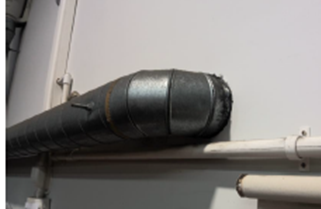
Following a recent Auckland Council inspection, the building failed its audit due to passive fire issues surrounding penetrations through a fire-rated warehouse wall.
The penetrations had been created for HVAC services and had existed since the building was originally constructed. Despite this, the property had continued to receive its annual BWOF without the issue being identified.
Council required the owner to review the building’s fire report and work with the BWOF team to ensure all penetrations through fire-rated walls were appropriately fire-stopped and fully sealed.
Once the remedial work was completed, approved fire-stopping identification labels also needed to be installed beside each sealed penetration.
Why passive fire issues are being picked up
Across the Auckland Council BWOF audits we have been involved with so far, passive fire compliance has been one of the most common areas of concern.
Issues can include:
- Unsealed penetrations through fire-rated walls
- Inadequate fire-stopping around building services
- Fire doors that do not operate or seal correctly
- Compliance matters that were not identified during previous inspections
These issues are not always obvious during the normal use of a property. In some cases, the work may have been completed during the original construction or as part of later alterations and remained in place for years without being questioned.
However, the fact that an issue has not previously been identified does not remove the owner’s responsibility to complete the required remedial work once Council raises it.
Managing the remedial process
Once the failed item was received, the next step was to coordinate the relevant specialists and confirm the scope of work required.
This involved reviewing the fire documentation, identifying penetrations through the fire-rated wall and arranging for the affected areas to be properly sealed using an approved fire-stopping system.
The completed work then needed to be documented and labelled so it could be checked during Council’s reinspection.
This is where proactive commercial property management matters. Compliance issues can involve several parties, including Council, the BWOF provider, fire specialists, contractors, tenants and the property owner.
Someone needs to coordinate the process, keep the work moving and make sure the correct information is supplied.
The additional costs owners need to consider
Auckland Council charges for the initial audit. If the building fails and remedial work is required, Council also charges for the reinspection.
These costs are separate from the annual BWOF lodgement charge and any contractor or professional fees required to complete the remedial work.
While the additional cost can be frustrating, delaying the response may create further compliance risk and extend the time before the matter is resolved.
The key lesson for commercial property owners
An annual BWOF and an Auckland Council BWOF audit are not the same process.
A building may have received its BWOF for many years and still have historical compliance issues identified during an on-site Council inspection.
Owners should also be aware that the absence of previous concerns does not guarantee a building will pass a future audit.
Passive fire systems, penetrations, fire doors and supporting documentation should be reviewed carefully, particularly in older buildings or properties that have undergone alterations.
Good commercial property management is not simply about lodging documents when they fall due. It is about identifying risks, coordinating the right people and dealing with compliance matters before they become larger and more expensive problems.
Need help managing your commercial property compliance?
If you own an Auckland commercial or industrial property and need support managing BWOF requirements, Council audits, contractors or remedial work, talk to our Property Management team.
We can help coordinate the process, keep you informed and make sure identified issues are followed through to completion.